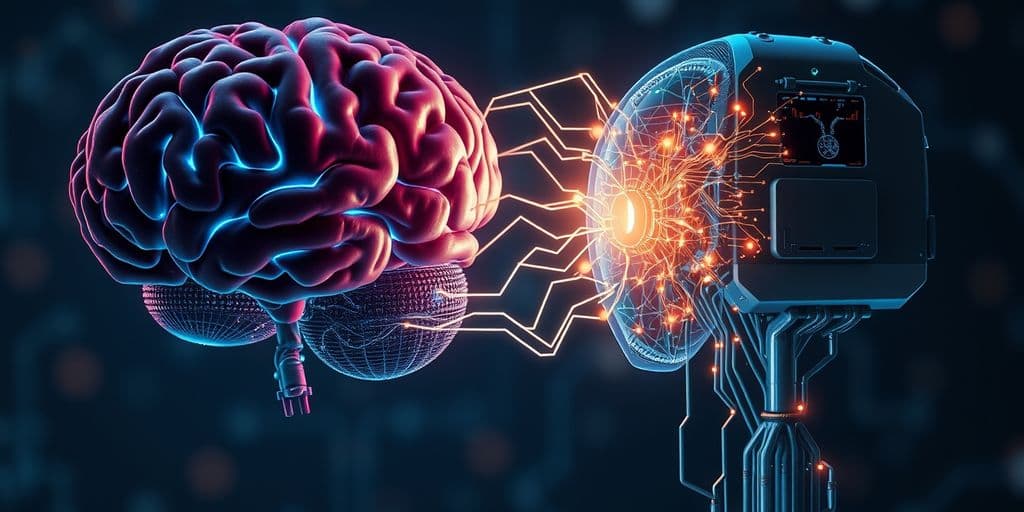
A Harvard neuroscientist claims to have developed an AI algorithm capable of giving humans "perfect and infinite memory." Gabriel Kreiman, who researches artificial intelligence and neuroscience at Harvard Medical School, recently launched a startup called Engramme with the goal of commercialising technology he believes will fundamentally transform human cognition.
Kreiman describes the venture as a "fight against oblivion." The technology relies on what he calls "large memory models" — a deliberate play on the term "large language model" used for AI systems such as ChatGPT — to retrieve and organise data from a person's entire digital life. In a manifesto published on the company's website, the founders assert that this innovation will reshape every major profession, from medicine and law to engineering and the arts.
"Humanity has been fighting the problem of forgetting since the dawn of time," Kreiman wrote on LinkedIn. He describes the current moment as the "memory singularity" — the point at which, after 300,000 years of human history, people will finally stop forgetting. Engramme is reportedly seeking to raise approximately $100 million, with a projected valuation of up to $1 billion.
The startup is not operating in isolation. AI platform StoryFile already offers users the ability to be immortalised through virtual avatars trained on personal video and audio recordings. Meanwhile, Meta was granted a patent to simulate a user's social media activity using language models — even after that user's death.
Yet the prospect of permanent memory raises profound ethical concerns. Neuroscientists and psychologists have long recognised that forgetting is not merely a cognitive failure — it is an active and necessary process. The ability to let go of painful experiences, irrelevant information, and outdated beliefs is essential to emotional resilience and mental health. Conditions such as hyperthymesia, in which individuals involuntarily retain every detail of their lives, are frequently associated with significant psychological distress. If memory becomes permanent by design, questions arise about who controls that data, whether corporations could exploit it, and what it means for individual autonomy and psychological wellbeing. The line between preserving the past and being imprisoned by it may prove thinner than Kreiman's manifesto suggests.