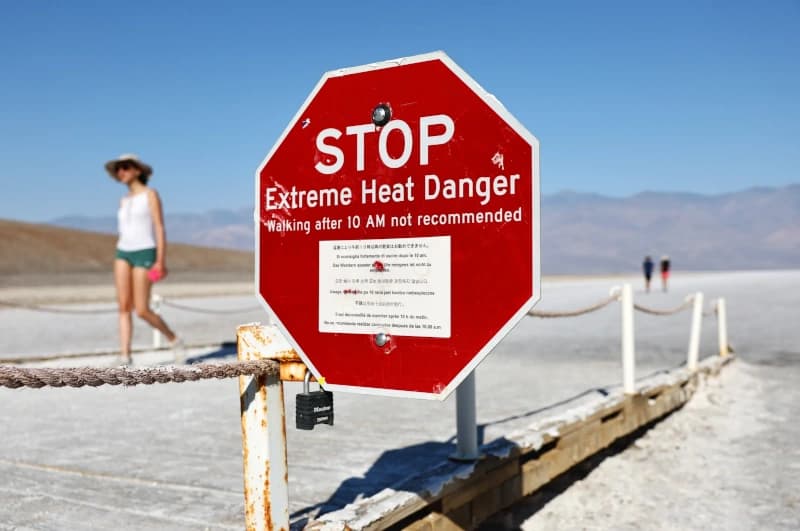
Climate breakdown is dramatically reducing the hours when people can safely perform everyday activities, according to alarming new research. One-third of the world's population now lives in areas where extreme heat severely restricts normal life.
Rising temperatures, caused by burning fossil fuels, are making it dangerous for even young, healthy adults to do basic tasks like housework or climbing stairs during summer daylight hours. The situation is far worse for elderly people, who struggle more to regulate body temperature through sweating.
The study reveals that people over 65 now face approximately 900 hours yearly when heat dangerously limits outdoor activity—equivalent to more than a month of daytime. In 1950, this figure was only 600 hours, showing a worrying acceleration.
The crisis disproportionately affects poorer nations, despite their minimal contribution to climate change compared to wealthy countries burning gas, oil, and coal. In tropical and subtropical regions, heat restricts elderly people's outdoor activities for one-quarter to one-third of the year. Countries in south-west Asia (Bahrain, Qatar, Kuwait), south Asia (Pakistan, Bangladesh, India), and west Africa (Mali, Niger, Senegal) face the most severe challenges.
Within countries, vulnerability varies enormously. In India, the Indo-Gangetic Plain suffers most, while mountainous regions fare better. In Gulf states, wealthy residents escape heat through air conditioning, whilst poor migrant workers face dangerous conditions on construction sites.
Researchers measured "liveability" using METs—units representing human energy expenditure. Safe conditions allow people under 65 to perform moderate activities like sweeping or walking without heat stress. "Unliveable" conditions force people into sedentary activities only.
The study compared data from 1950-1979 with 1995-2024, revealing expanding areas suffering heat limitations. The worst year was 2024.
Lead author Luke Parsons warned: "Hundreds of millions of people can no longer safely go about their daily lives outside during the hottest parts of the year. Those people are overwhelmingly in countries that have contributed least to the problem."
Scientists emphasise urgent action: rapidly reducing fossil fuel use and directing resources to the most vulnerable communities, age groups, and regions