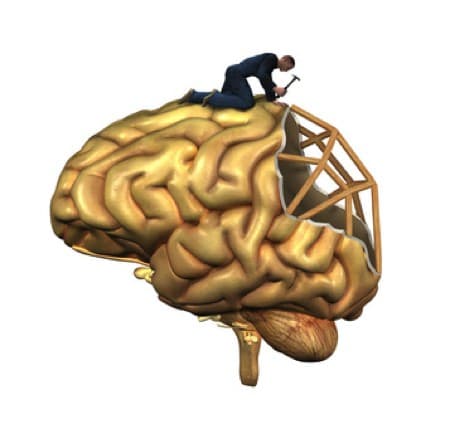
Imagine your brain is a powerful engine. Over time, it doesn't just slow down — it also starts to overheat. Tiny "fires" of inflammation burn inside the brain's memory centre, causing brain fog that makes it harder to think, form memories, or adapt to new situations. Scientists call this process neuroinflammaging, and for a long time, it seemed like an unavoidable part of getting older.
But exciting new research from Texas A&M University suggests this process might actually be reversible — and the solution is surprisingly simple: a nasal spray.
A team led by Dr. Ashok Shetty developed a spray that, with just two doses, dramatically reduced brain inflammation, restored cellular energy, and significantly improved memory in preclinical models. Incredibly, these changes happened within weeks and lasted for months.
The findings were published in the Journal of Extracellular Vesicles and could transform how scientists treat age-related brain diseases like dementia. In the United States alone, dementia cases are expected to double by 2060, making innovations like this more urgent than ever.
"Brain aging can be reversed, to help people stay mentally sharp, socially engaged and free from age-related decline," said Dr. Shetty.
So how does it work? The spray contains millions of microscopic particles called extracellular vesicles (EVs), which carry tiny genetic messengers called microRNAs. These travel directly into brain tissue through the nose, bypassing the brain's protective barrier without any surgery.
Once inside, the microRNAs switch off the systems that cause chronic inflammation in aging brains. They also recharge the brain's cellular "power plants" — the mitochondria — restoring the brain's ability to process and store information.
Tests showed that treated subjects dramatically improved at recognising familiar objects and detecting changes in their environment — clear signs of better memory and sharper thinking.
"We are giving neurons their spark back," said Dr. Narayana.
The treatment worked equally well in both males and females, which is rare in biomedical research. The team has already filed a patent, and future applications could include helping stroke survivors recover lost brain function.
"We're aiming for successful brain aging: keeping people engaged, alert and connected. Not just living longer, but living smarter and healthier," Dr. Shetty said.