The US government recently released hundreds of classified files on Unidentified Anomalous Phenomena (UAPs), covering cases from the 1940s to today. A new Steven Spielberg film about extraterrestrial life has added to the excitement. Polls suggest roughly one third of people in several countries believe aliens are already visiting Earth. But is that really likely? There are three strong reasons to doubt it.
Space Is Unimaginably Large
The nearest star to our Sun, Proxima Centauri, is about 40 trillion kilometres away — that is 4.3 light years. Our fastest spacecraft, the Parker Solar Probe, travels at roughly 191 kilometres per second, which is only 0.064% of the speed of light. At that speed, reaching Proxima Centauri would take around 6,650 years.
Even if a ship could travel close to the speed of light, Einstein showed that time passes more slowly for fast-moving objects. Astronaut Scott Kelly returned from the International Space Station slightly younger than his identical twin on Earth because of this effect, called time dilation. For travellers crossing the galaxy at high speed, the difference would be far more dramatic. Aliens returning home might find their planet hundreds of years older than when they left — making them true time exiles.
The Energy Problem
As a spacecraft accelerates, its mass increases, and the energy needed to keep accelerating grows enormously. At the speed of light, the ship's mass would become infinite — requiring infinite energy, which is clearly impossible. Even at near-light speeds, stray hydrogen atoms in space turn into intense radiation that could destroy both passengers and the hull.
Our Biosphere Could Be Deadly to Aliens
Earth's atmosphere is rich in oxygen. While oxygen is essential for us, it is highly reactive and could be corrosive or even fatal to alien biology. Visiting aliens would presumably need protective suits — yet descriptions of alleged alien encounters rarely mention any.
Are They Out There, Though?
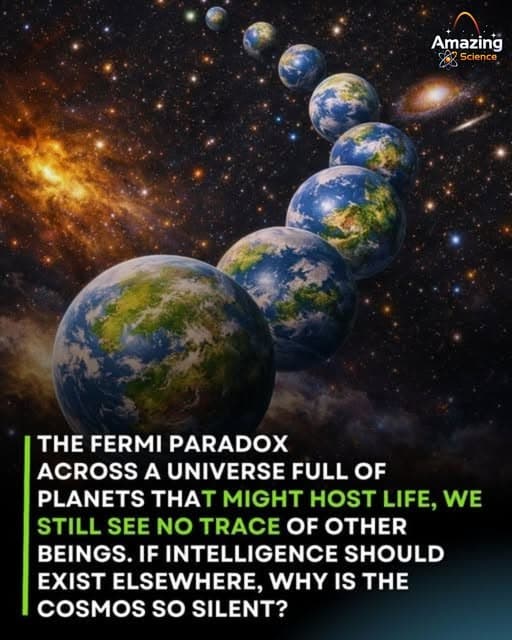
Scientists have identified around 6,200 exoplanets across thousands of solar systems. Our galaxy contains over 100 billion stars, so the number of potentially habitable planets is vast. Closer to home, Mars, Europa, Enceladus, and Titan are considered possible locations for microbial life. Organisations such as the SETI Institute have been scanning the skies since 1960, yet nothing has been detected. The universe is 13.8 billion years old — finding signals within our short window of searching is a huge challenge. But as one scientist put it: if we never search, the chance of finding anything drops to zero.