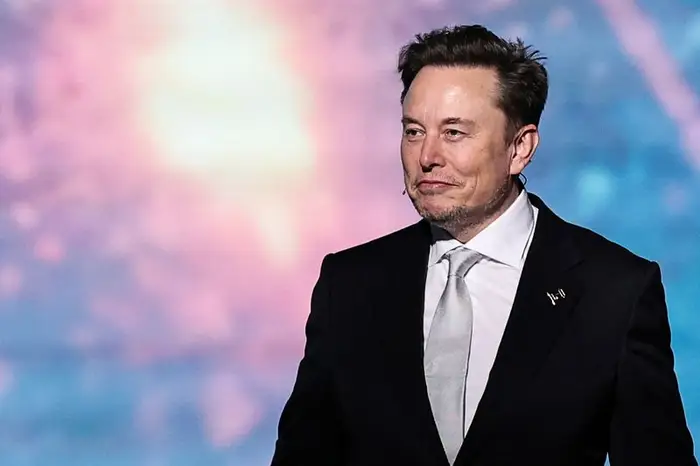
Is work really going to become something we choose to do, like gardening? That's what Elon Musk believes might happen in the next 10 to 20 years.
The Tesla CEO spoke at the U.S.-Saudi Investment Forum in Washington, D.C., suggesting that artificial intelligence and robots will make work optional. He compared having a job to growing vegetables in your backyard - something you do because you enjoy it, not because you have to.
"My prediction is that work will be optional. It'll be like playing sports or a video game or something like that," Musk said. "If you want to work, it's the same way you can go to the store and just buy some vegetables, or you can grow vegetables in your backyard. It's much harder to grow vegetables in your backyard, and some people still do it because they like growing vegetables."
According to Musk, millions of robots working alongside AI will create huge improvements in productivity. The billionaire tech leader, worth about $470 billion, wants Tesla to become much more than just an electric car company. He has big plans for his Optimus robots, hoping they will make up 80% of Tesla's value, though these robots have faced many production delays.
But not everyone thinks this automated future sounds wonderful. Many people worry about AI taking away entry-level jobs, which might be making it harder for young people to find work and see their salaries grow. For some, this sounds more like a nightmare than a dream come true.
In Musk's vision of the future, money won't matter anymore. He gets this idea from science fiction books by Iain M. Banks, who wrote about a world where super-intelligent AI exists and traditional jobs don't. "In those books, money doesn't exist. It's kind of interesting," Musk said. "And my guess is, if you go out long enough—assuming there's continued improvement in AI and robotics, which seems likely—money will stop being relevant."
Previously, Musk has talked about "universal high income" - a system where everyone gets money to live well without needing to work. This idea is similar to what OpenAI CEO Sam Altman supports, called universal basic income, where governments give people regular payments without any conditions.
Can Musk's Vision Actually Happen?
Economists think creating Musk's world will be very challenging. First, will the technology needed to automate jobs be affordable in the next twenty years? While AI costs are dropping, robots remain expensive and difficult to use widely, according to Ioana Marinescu, an economist at the University of Pennsylvania.
"We've been at it making machines forever, since the industrial revolution, at scale," Marinescu explained. "We know from economics that you often run into decreasing returns, as it gets harder to make progress in a line of technology that you've been working on for centuries."
AI is developing quickly and can help with many office jobs, but physical robots needed for manual work are not only more expensive but also very specialized. This makes them slower to adopt in workplaces.
Marinescu agrees that full automation might be the future, but she questions Musk's timeline. AI adoption in workplaces isn't happening as fast as expected, despite recent layoffs in tech companies. A Yale Budget Lab report from October found that since ChatGPT became public in November 2022, "the broader labor market has not experienced a discernible disruption" from AI automation.
Another big question is what will happen to millions or billions of people without jobs. Even if universal basic income becomes necessary, getting politicians to support it is a different challenge, said Samuel Solomon, a labor economics professor at Temple University. The political systems supporting this transformed workforce will be just as important as the technology.
"AI has already created so much wealth and will continue to," Solomon said. "But I think one key question is: Is this going to be inclusive? Will it create inclusive prosperity? Will everyone benefit?"
Current systems seem to be increasing the gap between rich and poor during this AI revolution. Musk's $1 trillion pay package is just one example. The AI boom has created class differences, with big tech companies seeing higher profit expectations while other companies see theirs go down.
What Would This Mean for Human Life?
Solving the complicated details of a work-optional world is one challenge. Deciding whether humans actually want this is another.
"If the economic value of labor declines so that labor is just not very useful anymore, we'll have to rethink how our society is structured," said Anton Korinek, a professor at the University of Virginia who studies AI economics.
Korinek mentioned research from 1938 that found humans get satisfaction from meaningful relationships. Most of those relationships currently come from work. In Musk's imagined future, new generations would need to find different ways to build meaningful relationships.
Musk shared his own thoughts about human purpose in this future: "The question will really be one of meaning: If the computer and robots can do everything better than you, does your life have meaning? I do think there's perhaps still a role for humans in this—in that we may give AI meaning."