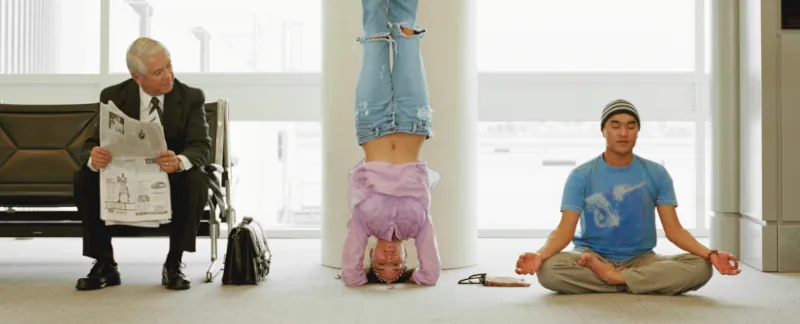
Airports are peculiar places—neither entirely here nor there, they disrupt our sense of time, space, and self. Psychologists and sociologists suggest these transient zones affect human behavior in ways that explain both strange and sometimes antisocial actions.
Unusual behaviors at airports range from harmless—like sleeping on the floor or spontaneous yoga sessions—to the alarming, including drunken altercations and even attempts to open plane doors mid-flight. Many incidents have become more frequent, prompting calls from airlines like RyanAir to limit alcohol consumption in these settings.
Psychological Pressure Cookers
For some, airports mark the beginning of leisure and indulgence, setting a festive tone. For others, flying provokes anxiety. Combined with overstimulation from crowds and noise, these stressors can ignite irritability and poor judgment.
Environmental psychology suggests we’re highly reactive to our surroundings. Airports, crammed with people, screens, and announcements, easily overwhelm us. Stress from time pressures, security checks, and flight delays exacerbate emotional responses. Anxiety, whether chronic or temporary, has a strong link to anger outbursts.
The "Thin Places" Effect
From a psychogeographic view, airports resemble “thin places”—a term from Celtic traditions denoting sites where the boundary between worlds feels faint. Modern airports are both physically and metaphorically liminal. After passing through security, one exists outside nationality and time zones, with destination on the mind but no fixed identity in the moment.
In these transitional zones, identity and social norms loosen. People may overshare with strangers or behave with a freedom not seen in their usual environment. Alcohol further blurs boundaries, enabling behavior either warmly sociable or alarmingly aggressive.
Such spaces may disorient us by stripping away cues that help define our identity: routines, places, national borders. Without these anchors, individuals may feel “adrift”—a mental state linked to instability and poor decision-making.
Freedom—or Fracture?
There is, however, a liberating aspect to airport disorientation. Escaping rigid time structures and personal roles can be refreshing. As psychologist Steven Taylor writes, stepping outside habitual routines can revive a sense of freedom and possibility.
But this freedom is not always harmless. Freud's concept of the id—the primal, instinctual self—suggests that such environments may unleash urges normally suppressed by our social “ego.” Combined with alcohol or drugs, this can lead to reckless or dangerous behavior.
Given the unique psychological climate of airports, some experts argue a legal limit on alcohol may be necessary to prevent chaos where all other boundaries have faded.