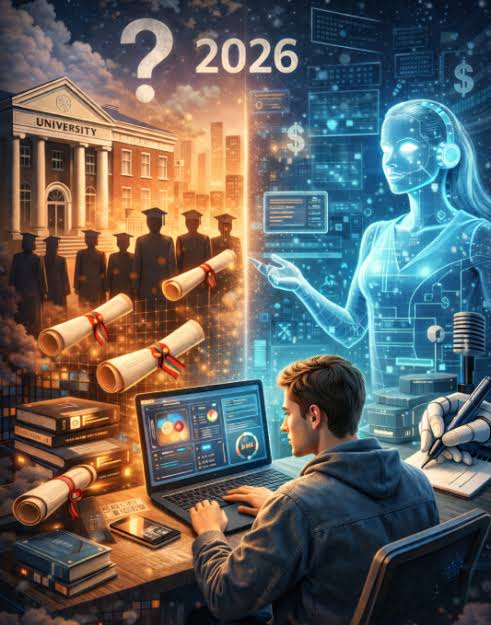
Artificial intelligence is changing the job market — and many college students are wondering whether their degree will still be valuable when they graduate. Could AI take over the work they are training to do? And if so, what should they study?
A recent survey of 2,000 college students in the United States found that nearly seven in ten (69%) believe AI will make it harder to find a job. Fewer than half feel optimistic about their career prospects after graduation. One in five students has even changed their major because of these worries.
So what skills will actually matter in an AI-powered world? According to Leah Belsky, VP of Education for OpenAI, employers will look for transferable skills: critical thinking, AI literacy, leadership, and collaboration. These are abilities that AI cannot easily replace.
At American University's Kogod School of Business, students are taught to use AI critically — learning to spot errors, think about ethical questions, and judge when AI genuinely adds value. The curriculum combines AI skills with communication, teamwork, and presentation skills. Casey Evans, the school's interim dean, says employers keep demanding these human-centred abilities alongside technical knowledge.
But does this reassure students? Not always. Burton Baecker, a student at the University of California, Davis, originally studied accounting — until he noticed that AI could handle much of the work. He added finance to broaden his options. "There's no point in going into that field anymore if AI can do it all for you," he said. Yet Evans points out that accounting firms are still actively recruiting, with demand currently outpacing supply.
Sammy White, a dramatic writing student at New York University, takes a different view. He is not convinced AI will completely take over creative fields, though he admits its growth is "a looming thing." His approach? Pursue what he loves. "If the job market is going to be rough, I might as well try to pursue what I really love doing," he said.
The bigger question remains: as AI tools become more powerful, are universities truly preparing students for what lies ahead — or are they still catching up?