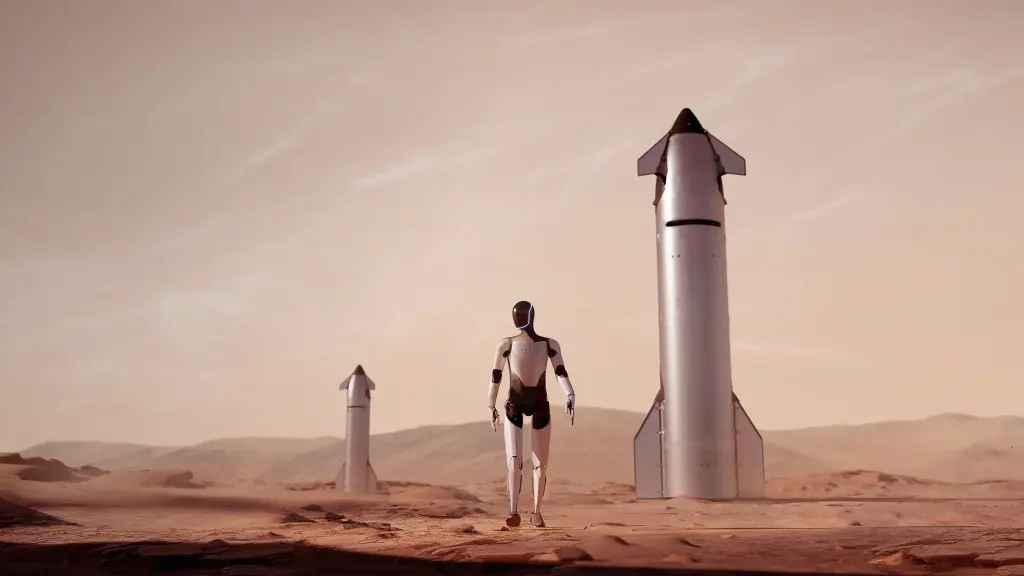
Elon Musk — the world's first trillionaire and, apparently, not someone who runs out of ambition — plans to send rockets into space before the end of 2026. The goal? To begin shipping materials to both the moon and Mars in order to establish colonies. Robots will go first, because robots, conveniently, do not need air to breathe or anyone to call when things go wrong.
Musk has recently shifted SpaceX's focus toward the moon, describing it as "much faster to complete" than a Mars city. His timeline for a functioning lunar settlement is around ten years. As for Mars, he is optimistic that materials could start arriving within seven years, with self-sustaining cities on the red planet expected — if you believe him — somewhere between 2045 and 2055.
To support all of this, Musk has filed applications with the Federal Communications Commission to launch a constellation of 100,000 satellites. These would handle communications between Earth and space and provide the computing power required for billions of AI-powered devices. According to Jim Cantrell, a founding member of SpaceX, centralised satellites are necessary because you would not embed a powerful AI system into every individual robot. The robots, he explains, will build the settlement before any humans arrive.
The moon serves as a proving ground. A trip there takes roughly three days, meaning that if something goes wrong, rescue and spare parts are relatively accessible. Mars, by contrast, is a six-month journey with no quick escape route. Experts suggest that working through all the logistical challenges on the moon — generating power, drilling for water, constructing habitats, recycling oxygen — means fewer fatal surprises on Mars.
Tesla's Optimus robots are expected to handle most of this preparatory work. As Cantrell explains with characteristic bluntness, humans are complicated: they eat, exhale water, and have families. Robots merely need sunlight and the occasional lubrication. On Mars, other robots could manufacture rocket fuel from the Martian atmosphere and recycle oxygen through electrolysis — a process already in use on the International Space Station.
As for what life will actually feel like for the first human settlers, one expert described it as "simultaneously exciting, boring and terrifying" — exciting because you are on Mars, boring because you are confined to your habitat, and terrifying because instant death awaits just beyond the walls. Inspiring stuff.