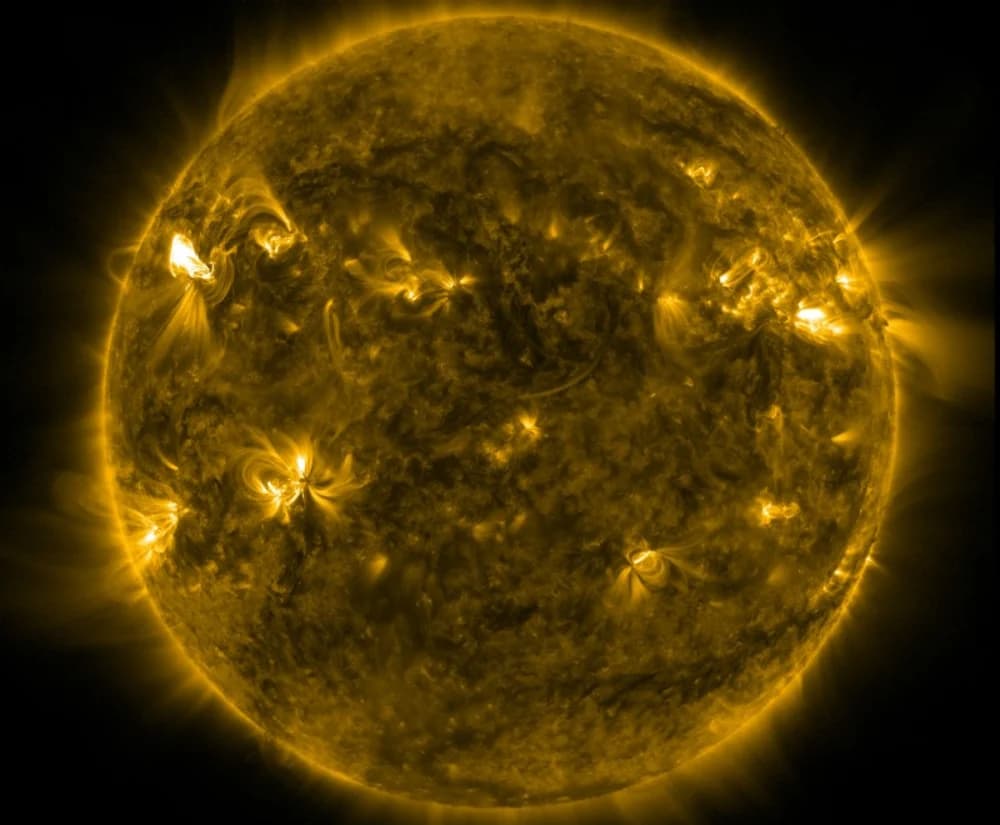
A recent study has uncovered evidence of a massive solar particle storm that struck Earth around 14,300 years ago—during the final stages of the last Ice Age. Scientists say this ancient storm was about 500 times stronger than any modern solar event, posing serious questions about the vulnerability of today’s technology-dependent world.
This storm, which left its signature in the tree rings of the French Alps, suggests the sun is capable of unleashing far more powerful events than previously imagined. The storm was not the typical solar flare that causes auroras, but a solar particle storm—a burst of fast-moving protons that could have serious consequences for power grids, satellites, and communication systems if it happened today.
Lead researcher Kseniia Golubenko explains that understanding such rare, extreme events is vital for preparing for the future. The study's findings suggest our infrastructure is not equipped to handle the strongest potential solar storms. The ancient event even dwarfs the famous Carrington Event of 1859, which caused auroras as far south as the Caribbean and disrupted telegraph systems.
Experts say this kind of solar activity, while rare, is part of a broader category known as "Miyake events." These events have occurred several times over the last 12,000 years. But this newly identified one from 12,350 B.C. is by far the most powerful, raising the bar for what scientists consider a worst-case scenario.