The word "terrorist" used to mean something specific: a person who uses violence and fear to achieve political goals. These days, however, governments seem to be using the label rather more freely — and the consequences are serious.
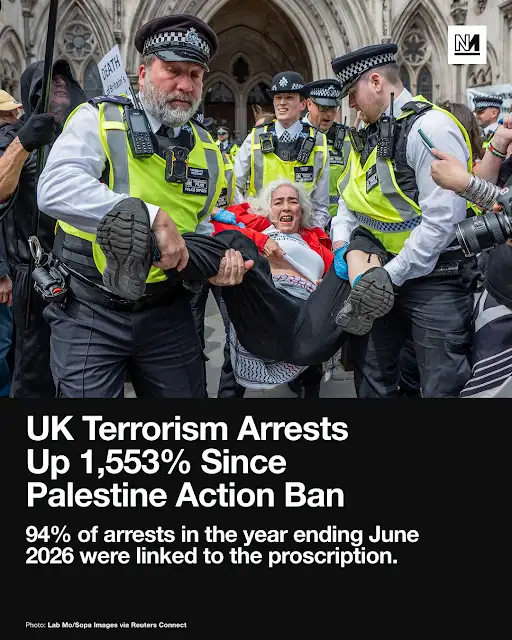
In the UK, terrorism-related arrests jumped by 1,553% in the year ending June 2026, reaching a record 3,867. That figure sounds alarming — until you discover where most of those arrests came from. A staggering 94% were linked to people who expressed support for Palestine Action, a protest group that the Labour government under Keir Starmer banned in July 2025. It was the first time in British history that a direct action group had been placed under the Terrorism Act.
So who exactly are these dangerous terrorists? According to Amnesty International, they include grandparents, teenagers, elderly people in wheelchairs, and at least one 94-year-old Jewish human rights lawyer — all arrested for peacefully holding paper signs that read: "I oppose genocide. I support Palestine Action." The foreign secretary himself, Ed Miliband, admitted that criminalising elderly protesters and vicars was not the government's "intent". One wonders, then, what the intent actually was.
The pattern is not unique to Britain. In the United States, the Trump administration has been stretching the word "terrorist" in similarly creative directions. After labelling certain Caribbean fishing communities as "narco-terrorists" — a term that is vague enough to mean almost anything — US forces conducted operations in which fishermen were killed without any judicial process, any trial, or any evidence presented in a court of law. The label, it seems, is the sentence.
This is the dark logic of the terrorism label: once it is applied, normal legal protections tend to disappear. You do not need a trial. You do not need evidence. You do not even need to have done anything violent. A grandmother holding a sign and a fisherman casting a net can both be swept up in the same legal — or extralegal — machinery, simply because a government found it convenient to call them terrorists.
Palestine Action co-founder Huda Ammori has been granted permission to challenge the proscription in the Supreme Court. Whether the courts can put the word "terrorist" back in its box remains to be seen.